Episode Transcript
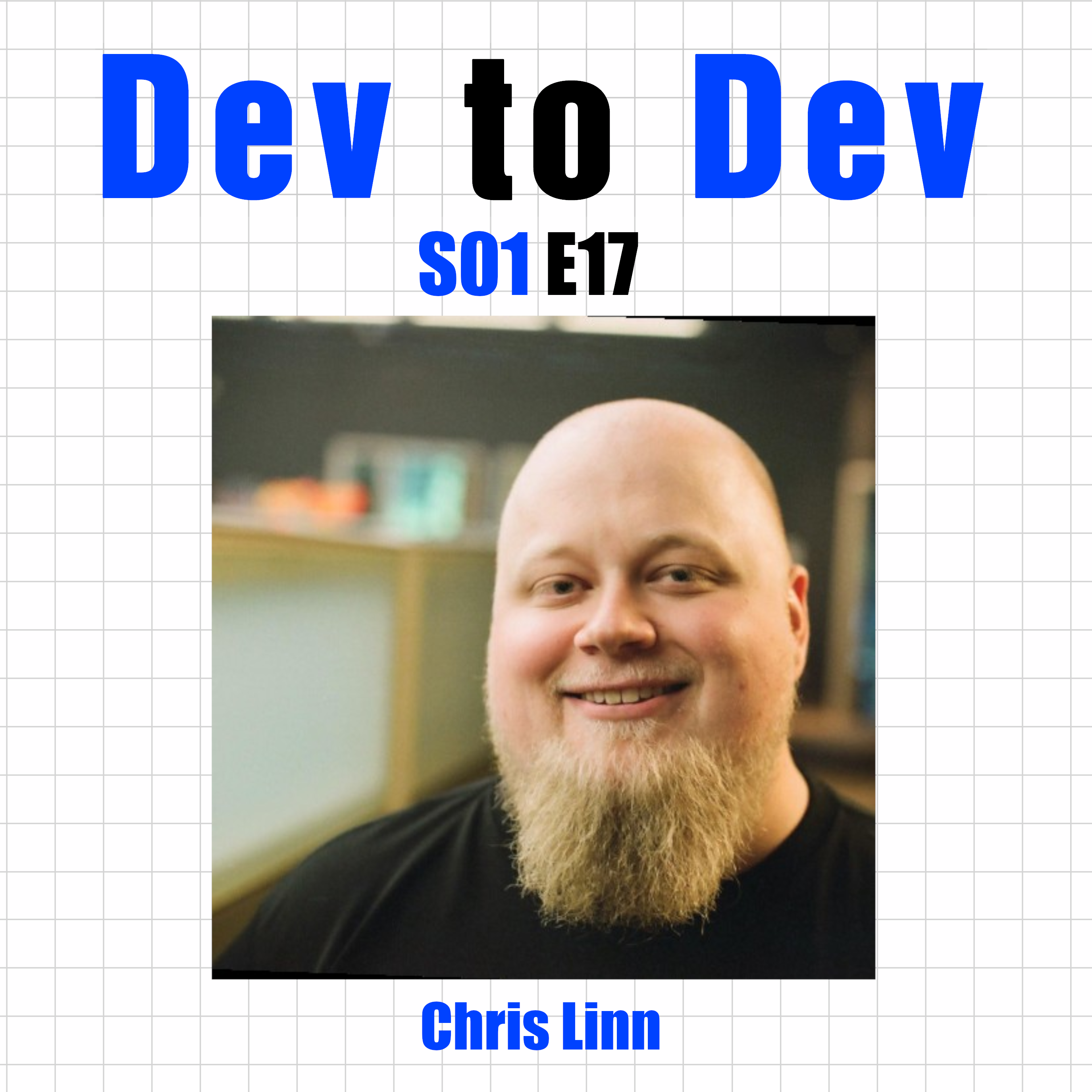
[00:00:00] Speaker A: Hi, everyone. Welcome to another episode of Dev to Dev, the podcast about everyday video game developers and why they do what they do every day. I'm Alex Solomon, back for another conversation, this time with a good friend and colleague.
Chris, would you like to introduce yourself?
[00:00:14] Speaker B: Hi, I'm Chris Lin. I'm a producer in this industry.
Yeah, like Alex said, friend, colleague, been in the industry for 15 years or so.
[00:00:25] Speaker A: Cool. Yeah, thanks for doing this, Chris. It's exciting to dig in. Like you say, we've worked together for a couple of years. I feel like we now each other pretty well. But looking at your history, I'm like, oh, yeah, I want to know about that, and I want to know about that.
So, yes, let's dig in. So I always like to open this with my favorite question. What first inspired you about video games?
[00:00:44] Speaker B: Yeah, I think for me, it was the creativity in the art. Initially.
Growing up, I had to convince my mom, you know, pretty heavily to buy new video games.
We didn't, you know, times are tough, and my angle was usually, like, the artistic value and the creativity of, like, me becoming my own little Peter Molyneux and explaining to her why Fable is the next best thing and she needs to spend the $50 or whatever to get me it.
The blades of grass will move and blah, blah, blah, blah. None of it was true. But I think that was. That was initially what it was for me is just like, looking at them as, like, an art medium and a way to be creative.
And it wasn't until, kind of, guess putting two questions in one. But it wasn't until, like, for me, like, Diablo 2, when I was like, I think I kind of want to make these things.
You know, it changed from, like, just like playing Halo with your friends or Call of Duty or whatever it was. Diablo 2 was kind of like my secret game. I played by myself and was like, I really like this, like, these systems and, like, the interaction of online and, like, the core loop and that type of thing. And that's what really started changing my brain towards, you know, wanting to be a part of that.
[00:02:04] Speaker A: Huh. Okay, so. So. So the art and creativity was what drew you first. And this ambition to be one of those people that gets to do that was an early inspiration. Even if you didn't think initially that you could do that, you were kind of convincing your parents that that's what this could be. Right? This could be a profession for me, huh?
[00:02:23] Speaker B: Yeah, it was.
It was a tough sell.
You know, back. Back in those days, there wasn't a ton of schooling and Things like that for it. And you went from going to a pretty general university and getting maybe an arts degree or. Which are all valid, valid paths. And then you choose, like, a little tech school in Minnesota and go for a game design degree. And those things don't always work out. I think, like, my graduating class was, like, less. Less than 15 out of, like, 300 that started in it. You know, it's. There's a. There's a pretty big difference between loving games and loving to make games.
[00:03:01] Speaker A: Yeah, definitely agree. So where did you grow up?
[00:03:05] Speaker B: I grew up in Minnesota, just outside of Minneapolis.
So in Midwest, all my life.
Anybody watching that, you know, do I have to move to a coast to be in the games industry, be a bearded person in the Midwest your entire life, and not have to move to LA or not have to move to Seattle or. But you can get lucky.
[00:03:28] Speaker A: Okay. And did he grow up with any other. Any siblings, any other gamers in the family?
[00:03:34] Speaker B: Yeah, I have one brother, one younger brother, and he.
He is a gamer as well, but he's more of the. He's more of, like, the handyman of the family. He understands how, like, real tools and saws and drills work and that type of thing. And I understand how 3D printers work and how to make sure nav mesh doesn't break things.
[00:03:57] Speaker A: So he's the practical brother. You're the technical brother, correct?
[00:04:00] Speaker B: Yep. I'm the one you call if your router's broken. Yeah.
[00:04:04] Speaker A: Okay. And did you notice sort of at an early age, that's what drew you to video games more than him? Like, you know, did you see that developing early on, that sort of technological push that you had? Because that's a big part of video games, right? Certainly for me. Right. Loving video games is the technology behind it.
[00:04:19] Speaker B: Mm. I think.
I think, honestly, it might have been like, the friend groups we were a part of. Like, we both.
We both were very big, like, football players in high school. So it was all football, all the time, that type of thing, especially in our area, especially in, like, the metro of Minneapolis. Um, and I think I was just more okay with it not being my thing forever.
I. My friend groups that, like, slightly varied outside of that, and I think my brother did as well, but his was very, very core to that, like, that sports group. And those don't always have the same amount of gamers they do now with all, like, times have changed, which is great. But back then, they. They, you know, it was mostly Madden or socom, if they were extra nerdy.
[00:05:15] Speaker A: Right. Yeah. Yeah. So so you, although you were sporty, you know, in sports, you, you had friends that, that were more gamers and that sort of drew you as a. Right. Got it. Okay.
Okay. So, so games were, were a big part. Were there any particular types of games that you were kind of drawn to initially or were you just kind of playing whatever, whatever was fun.
[00:05:38] Speaker B: Initially? It was initially, I would say it was like first person shooters and things like that, just for the social aspect of them, you know. Halo 1 and Halo 2 and Halo 3 were really, really big in my formative years. But I think early on something that I've brought into like being a developer is being a sponge for games and understanding what a lot of different games do. So just as many hours as I had in Halo back then, I had 800 in Guild Wars 1, the MMO or Diablo, like I mentioned, even down to Xbox Live arcade games like Castle Crashers or Geometry wars or a little crappy one. Not crappy, but one called Hexic, which was just like a rotating one.
I just, I like to see what other games were doing and what they were making and what could make them good. Like try to, try to look through, through it all and find the diamonds in all of them. But there was certainly some that, you know, I played all the time when my friends were on. But like, I still have like very fond memories of like cell damage for the Xbox and you know, that wasn't by any means the most fully featured game, but it's just like, oh, this is cool.
[00:07:02] Speaker A: Got it. So social, social gaming was, was part of it. But where do you think that sort of curiosity for all types of different games came from? What fueled that, do you think?
[00:07:16] Speaker B: I think if anything it might have been like a personality trait of. I liked knowing a lot about different games and you know, being like that nerd or whatever that could be, like, oh, have you heard of this thing? Or have you seen what they did with this like sword system over here? Like Star Wars, Obi Wan, it's all on the right analog stick. Did you know that? Like that type of thing.
I think that was, that was a big thing and I think it's it in conversations it helped, you know, be like, oh, you know, like, check out this cool thing. But then in, in my professional career, it's, you know, it's awesome to be in a meeting where we're pitching a bunch of ideas and you're like, oh, I have a comp for this. You know, like, hey, let's go check out, let's go check out one, you've heard me say all the time. But Brink from splash damage, let's go check out Brink. You know, like because of the objective stuff they did and everybody's like, oh, I never played that.
And I think my personality trait is like, it gives me like a little like bump of whatever chemical, you know, it's just like, ah, I know things and, but I enjoy it. I enjoy putting time into different games and you know, giving them their fair shake, trying not to be swayed by Steam reviews, you know, that type of thing.
[00:08:35] Speaker A: Yeah. Kind of making your own decision, getting to experience the game for yourself and you know, being able to pull from it what's good or bad depending on your experience with it. Yeah, I can relate to that a lot. I think that's also something I've always tried to do. Right. Tried to be the, the person that knows, knows about the games and can reference them in a way that's useful. Yeah, I know, I know how that feels.
And so you mentioned, you mentioned you, you went to school for game design.
Was that was Brown, was that Brown University?
[00:09:04] Speaker B: It was, yeah, I think it was Brown College, which I don't know if it still exists.
I went, I went there for a game design degree. It was, it was kind of cool though because it was the, it was a time in games like 2010, 2011 where like some very, very good schools were getting started, like the full sails, the digipens, the guild halls and then those are all very expensive. But there's a lot of other like trial by error schools like starting their own up and kind of figuring out how, how they, how they went.
And it was, it was kind of neat though because it was a four year degree in three years because I went year round, I had less breaks, I didn't get to have full summers and that type of thing. But I didn't really need those. You know, I could go back and see my family, I could go back and see my friends and, and I could stay focused on school.
And I think that that is really one of the things that got me lucky through all of that is I got through it so quickly and I got my degree that I was able to land my first QA job, you know, ahead of some sort of curve because there was a lot of, there was a lot of guinea pig programs out there at the time. And while the program itself may have not been like the most prestigious or whatever, you, you still got to teach yourself a lot of things. You still got to, you know, teach yourself the.
It was very Genericized. So like the basics of modeling in 3D max. The basics of. I think it was like Mudbox back then instead of zbrush or how to generate textures quickly in Photoshop, you know, basis of scripting, that type of thing.
And it just gave me another, you know, a general outlook which then I just, I took into my first QA job. But that general outlook is something that I think is really big for producers, is understanding a little bit of everything.
[00:11:04] Speaker A: Yeah, sounds like even though it was a game design course, you got a pretty broad exposure to lots of different parts of game development then.
[00:11:11] Speaker B: Yes, absolutely. Yeah, it was a, yeah, game design and development course, I guess technically. Yeah.
[00:11:16] Speaker A: That's good, right? That's interesting. And, and why game design was that? Why were you drawn to that course in particular?
[00:11:23] Speaker B: I wanted, I was between something like that or like a, like an animation and art thing from like an art institute. And I wanted a more general outlook because I wasn't certain certain yet where I fit into a development system. You know, I knew I like to make textures. I knew I like to.
I still really like, like painting and normal media and that type of thing.
I like doing like 2D sprites. But I also, I also like being, you know, like a, like a game direction type of thing. Like I think, I think I have a good pulse for like this is something we should improve upon or this is what we should do or that type of thing. So a course like that let me be in some leadership roles, be in, you know, oh, I'm going to handle up on the scripting over here. I'm going to do this over here.
And it just sounded like a better general role than going for, for me for then going for like an arts degree or even trying a bigger university with a normal computer science degree, which I still think is absolutely a valid course, especially if you're looking to get your foot in to QA and that type of thing and figure yourself out.
But for me, I was just trying to again, sponge up as much as I could.
[00:12:43] Speaker A: That's a really smart approach. Just trying to absorb as much understanding about how games are made rather than specialize right away. That's.
Yeah, I can again, I can relate to that a lot. Were you doing any kind of home development, you know, mapping or scripting or anything at home? Or is it all, you know, before you went to college or was it all primarily once you hit college that you did that?
[00:13:04] Speaker B: There was a little bit before college, but I'd say it was primarily in college. I definitely messed around with like Unreal and making maps in Unreal. Previously with like Unreal too.
But the.
I really wanted, going through high school, everybody just teaches you stuff. I really wanted to get there and be like, teach me everything. And then it was more of like, I'll teach you some things, but figure it out the rest yourself. So it was a bit of that. So when we got into school it was make a project in early, early Unity or any of the other failed 2D things that came and went, that type of thing.
So yeah, it was a bit of that, bit of Unreal, all that type of stuff.
[00:13:48] Speaker A: Got it. Okay. So you go to Brown College, you come out with a pretty broad understanding of game development and then you land a job as a tester. So how did that transition happen?
[00:14:01] Speaker B: Yeah, I got done in the summer of 2011 and it just so happened that Activision QA was hiring. There is a hub for Activision QA in like the southern metro of Minneapolis.
And I had examples of my work and this and that. I think I actually wore a collared shirt, which most people that know me know I don't.
And that was, that was like a really cool wake up call is like you get there and it's just like, oh yeah, everybody cusses here and blah blah, blah. And you know, we don't.
Maybe two guys will look at your like examples of work. But like we need people to get in here in qa.
And I, I got lucky that I, I got, I landed that job and they put me on what is called like the TRG testing group, which is like technical requirements. So while I wasn't playing the game often, I was doing a lot of like front end stuff of like making sure that the disk actually boots, making sure that when you disconnect your controller it doesn't crash or this and that.
And that was just again another, another lucky thing because that group gets to touch many more games than a group that we would call like functional testers.
Very, very important by the way. Anybody listening? But functional testers, you know, sit on a game and try to like find like the actual bugs in the game itself and, and you know, but they're only on a limited amount of games because they have a limited amount of time. So I started at Activision and worked there for a few years and was able to work on games like all the Cabela's, like hunting games which are whatever, but NASCAR prototype to the most, the Spider man titles from Beenox back in the day that were really, really cool and the Transformers games From High Moon, which are still very awesome.
And then Battleship, which is the first person shooter about a movie about a board game with Liam Neesons.
That was, that was interesting. But. But again, I got, I got to. I got, I got really lucky and got a ton of game credits there early as a QA tester, which is cool. And I played all these different types of games and started understanding, you know, how does the game data work? How do, how do like Sony or whoever fail these games if this part of the game doesn't work in submission, which would later come, you know, come back in when I'm working on Call of Duty or whatever is understanding like, oh no, we do have to fix this like black screen or this load screen that sits there for too long because I had this technical requirements background. They were, they were going to fail our submission if we did that. That type of thing.
[00:16:59] Speaker A: Yeah. Technical requirements testing is an interesting avenue of testing that is very poorly understood, I think outside of game dev, but is at the time, I think less so now. But certainly at the time was super crucial in understanding that layer between the game and the actual place where it's going to get shipped.
[00:17:20] Speaker B: Right.
[00:17:20] Speaker A: Because there were some of those technical requirements seem very pedantic, but they are requirements. Right. And if you miss them, your game will fail for, you know, for in theory, a very simple, simple reason. So it gives you a good. It feels like. It feels to me like it kind of extends that broad base of knowledge that you're growing from your college course through into that testing course where, you know, you're getting a broad understanding of, you know, a narrow area, but in a broad overlap of games and publisher relationship and stuff like that. That seems like a good build, builds on what you'd already got from Brown.
[00:17:56] Speaker B: Yeah. And it. Impedantic is the right word. It's like, I think TRG001 in the big list of these test cases, does the game boot like. Well, yep, pass, you know, that type of thing. But it got down to even specifics of like when you show your controller screen for your input mappings are. Does it have the right PlayStation logo on there? Does it have this type of thing? They can't be genericized like that type of stuff. And that was always really, really cool knowledge, I think, to have.
But yeah, there is that type of stuff. And I mean, it's not a glamorous spot at that point.
You're in a basement essentially in some.
In some building in some business district, you know, and that's just what it Is right.
[00:18:45] Speaker A: Yeah, yeah, but like you say, a very important gateway between the game shipping and the game, you know, the game being finished in the game shipping and a lot of responsibility in that role as well.
Okay, so. So you're there for just over a year, like you say, touched a lot of games.
And then you shift from sort of publisher side testing over to developer side testing at Raven.
So how did that shift happen?
[00:19:14] Speaker B: Yeah, again, I think when I, when I talk about like my career path with people or like kids that are trying to get into school for it or what should I do, I try to preface mine with like, I feel like I got lucky. You know, there is a certain amount of luck to it and that type of thing. It is who. You know, I was laid off from Activision back then. It was very. You work for nine months, you're off for three. You work for nine, you're off for three.
That during one of those three month periods I had sent an email to Raven Software about a design internship and someone actually emailed me back who is, I don't know if he was the design director at the time, but he was pretty high up there and he says, hey, we don't have any design positions, but thank you for reaching out. I see you have QA experience. You want to come QA test here.
And I absolutely wanted to move from publisher to developer. I wanted to be, you know, in those groups that I had seen with Beenox or High Moon on the testing of those games.
And I just kind of took a chance. So for me, I had lived in Minnesota my entire life and it was a temp QA position in Wisconsin in the global geography of things. Not a huge move. But for me at the time it was like, all right, you know, tell my girlfriend at the time now wife, I'm gonna go here and work on this temp job. I don't think you should come with me because I don't know with our industry how it's gonna work.
So I take that job and I move out to Madison, Wisconsin and get a little apartment with a friend of mine who also got a QA job there and just work, work my butt off, you know, like, wow, we're working on Call of Duty now. You know, like that type of thing. Like, we were, we were in the testing groups for Call of Duty. You know, I had like an air mattress in my apartment. The true no furniture apartment. You know, you just, you just work and you, and you work your butt off. But it was, it was eye opening, you know, it's just like, this is so cool. And Raven, Raven has a really great, like family studio culture. And as long as you're a person that isn't a jerk, you know, like, it was. I remember texting her, like texting my parents, like, oh, I got to talk to the game director today. And he sat at my desk or, or the. This designer was asking me like, what I really thought about this gun because I've been trying too hard and play tests and like that type of thing.
And, and yeah, I, I worked temp there for I don't know how long it was maybe, maybe a year.
But we brought in a. They had brought in a new QA manager near the end of that, who's a really good friend of mine now, didn't know him at the time.
And he was like, wow, you need to be full time.
I'm going to work to get you full time. Like, you should not be a temp tester. You are running this team.
And so he really went to bat for me and got me senior qa, which made me full time, which is, which is way different from being temp. And you just have so much more job security. You are part of that core QA team.
And yeah, that, that was just like that big break, you know, worked on, worked on like Call of Duty Ghosts, Call of Duty Online, which is the free to play one that went live in China, which is really, really cool.
And yeah, just like really kick started my QA experience. I had had some QA experience, but now I had live ops, AAA multiplayer shooter experience, you know, and that was, that was really, really cool.
[00:22:55] Speaker A: Yeah, it sounds like. So, so for about a year you were, you're in that temp role, living away from your partner, just trying to, you know, get the job done every day and make it work. Yeah, that must have been tough.
[00:23:08] Speaker B: Yeah, yeah, it was, it was definitely difficult. But I, I knew I was doing good work. And then it got, it got like reaffirmed, you know, we. We brought a new UA manager in and then I think it was like the, it was right before like the Call of Duty Ghost launch party when I. And I got that. So like, that launch party felt so much more cool, you know, and that type of thing we had. We had a really, really strong core group of QA there that really cared about the game.
I would say like 80 or 90% of them are still in the industry, be it like, like senior QA or near lead level at like pubg.
One of them, I believe, is at Santa Monica Studios. We have people that are at riot. So, like, that core group really keeps in touch still, even though we may not be at Raven anymore. But it was, it was a really, really special group of QA people that cared and really wanted to allow for QA to be a career choice for people.
It wasn't. We were like, we got to turn around this temp thing. This is, this is a really, really strong group. And yeah, that group's gone on to do really, really good things.
[00:24:15] Speaker A: That's cool. And I guess, like you mentioned, that shift from kind of publisher QA to internal QA continued that trend, I would imagine, of really getting to know the nuts and bolts of how the game's put together.
[00:24:27] Speaker B: Right.
[00:24:27] Speaker A: Like, once you go internal, you're right next to the developers. You're like, you say you're getting asked for feedback, you're talking to senior leadership, you know, so continue to build on that broad understanding of the way games are made.
[00:24:40] Speaker B: Yeah, I wanted to know how Call of Duty was built from the get go. And you get to see that as qa of what is causing our crashes, what is causing our script errors.
Oh, usually when we put in a new grenade, this will happen, you know, down to like, oh, yep, I understand. Like you reloaded and then you went prone, or we did this or we did that. We connected late. And you really start to hammer down on that. And I think that was probably one of the reasons I got ripped out into production so quickly after qa. There is just that, that understanding of the, you know, the full loop of the game.
[00:25:23] Speaker A: Yeah. Because you were only that senior, senior tester for about five months. Yeah. Before you moved into production. And sounds like one of the strengths you had was that broad base of understanding. Yeah. Of how games are made.
[00:25:36] Speaker B: Yeah, I think so. I think that was. That was a big proponent of it. And I was given, you know, like a very specific.
A group with like the Call of Duty Online free to play.
We had a large. A large group of us that was on what we would call the mainline Call of Duties and that type of thing. But we needed to make sure that we were supporting this free to play title and giving it its best shot, you know, working closely with Tencent and like, putting out new weapons, putting out new maps and that type of thing. And I was kind of doing the production work as a QA person. So the leaders of production there, and one of them is actually one of the leader of the production and then the leader of design there is the first guy I ever emailed going Back to my very start of Raven. So he always kind of had me under his wing. And I was like, yep, this guy's the real deal. Let's get him into production. And I think, you know, that. That, that path and that type of thing as a producer, it just kind of like formed up how I am as a producer. You know, it's.
Don't need to dovetail into it yet if we're not ready, but there's a lot of different types of producers out there, you know, and you kind of like feel out your way and feel out how you want to produce.
[00:26:55] Speaker A: Well, that's what that was gonna be. My next question is like, what was that shift into production like for you? Was it a culture shock? Did you feel a natural fit? Like, how did that go?
[00:27:05] Speaker B: I would say it was. It was a little bit of both. It was natural fit in the.
My day to day was pretty. Pretty similar. Is just now from the production side and managing some other things. It was like, I still need. Now I need to make sure that we're. We're shipping things on time, but I already have the knowledge of when all those things are on the schedule and that type of thing. But the.
The culture shock would be like, oh, I have a production boss now, and here's what. Here's what they need from me. That type of thing. And it's.
That's something as a producer now is I tell my leads is like, I'm gonna focus on what makes. If I'm on a certain part of the game or if it's the game in general, I'm gonna focus on what makes the game best with the teams that I have. So if it's a couple weapons teams, a couple maps teams or a huge gameplay team, my day to day is gonna be focusing on what is gonna get us there and what's gonna be the best quality. And that type of thing as a lead, I just need you to tell me what you need from me. You know, so you need this spreadsheet updated every two days or this thing before a meeting or this thing. That type of thing.
That's kind of how I interact with like the production structure is I want to focus day to day in the nitty gritty of the development teams. And then if the leadership needs things from me, just let me know. You just hit me up and I'll get that done. But I'm mostly focused on the game.
[00:28:36] Speaker A: Yeah. And I guess the nature of the work changes.
[00:28:39] Speaker B: Right.
[00:28:40] Speaker A: Rather than being on the sticks in the game kind of Finding the bugs, you're at a level slightly above that, kind of coordinating all those pieces moving together. But the, I mean, based on my experience in qa, that sort of inter team communication and coordination I imagine remains the same. Right. Because in qa, especially if you're quite senior qa, you're not just going, I found a bug, I found a. But, right, you're in that. Hey, this bug happened. Hey, we found this. Hey, there's a major problem here. Hey, we're struggling with this. Right. You have a lot of inter team coordination, especially in internal qa. So I'd imagine that part of the production was, you know, that's exactly what you were doing in production.
[00:29:21] Speaker B: Right.
[00:29:21] Speaker A: You're just on a broader scale probably, but there's a lot of similarities there between sounds like by the way, you QA'd and that production trap.
[00:29:30] Speaker B: Yeah, I think that's absolutely what you need to be doing is, oh, we have eight weapons coming out in three months here qa, here's what we're going to need tested and that type of thing. But I do feel that coming from QA and then going to production, you put so much more emphasis on making sure that QA is aware of things.
There is, there is a lot of people in the industry not at their own fault. That QA is more of a second thought of like, oh, yeah, it's QA testing this and going through that entire line.
It's always been just second nature to me of like, I have a very close relationship with whatever QA group I'm working with because I need them to understand this. Yeah, I'm not going to test it anymore, but I don't need them in the dark, you know, like, all right, we have these play tests coming up. This is what I'm looking for in this play test. This is the type of feedback we're going to be getting, you know, that type of thing.
And in having that, having that group on your side and having that group like having their messaging correctly and that type of thing, it just, that relationship is so much better. QA will always go to bat for you if you're going to bat for them. And it stinks to be in QA and be in the dark. I've been there. So now on the production side of it, I like to think that all the QA groups that I work with now are like, oh, this guy actually gets it, you know, and he, he actually cares. It's, it's a fourth of who I need to update because I need to Update art and I need to update audio, and I need to make sure they're all on the same thing. But that basis of communicating with QA is how I also communicate with other groups to make sure that they're aware of things. Because I was in QA and I understood being in the dark. I know the audio group doesn't want to be in the dark, or this art group doesn't want to be in the dark. So I do think that helps a lot. And I do think you can tell when a producer has started their path within QA versus not qa.
Not to say that either of those is better than the other, but it just. It's just something being this long in the industry, you can be like, oh, yeah, you were a tester at one point. I can tell you, yeah, you've got.
[00:31:40] Speaker A: That empathy for the other groups and keeping them in the loop and like you say, you know, keeping people aware of changes and things that are ready for test, things that are not ready for test. Yeah, that makes a lot of sense.
And so you go from production coordinator to associate producer. Was there a difference in those.
The remits of those roles?
[00:32:02] Speaker B: Probably somewhere in someone's cheat. But I just kind of.
Maybe they gave me more responsibilities, but it was just. I was already focused on the game. You know, it's more of like, yep, you're doing a great job. Please keep doing what you're doing. That type of thing. It was. It was cool back then. You know, Tencent is always seen as a bit of a boogeyman, but they. They worked really close with us on. We had a game group and I got to interact with them pretty often. And I remember them telling like, oh, yeah, we're. Chris isn't a production court anymore. He's now a ap and all the Tencent, like, it was like a group of five people that were that games group assigned from Tencent. They're like, oh, good, good, good.
And so they had my back and that type of thing too. So it was. That was cool to see. And it was just one of those.
It was one of those interactions and one of those games where it. It may just be a blip on the radar as far as the west is concerned, but it was. It was a really cool testing ground for Call of Duty as it stands, you know, like the.
I got to go to China a couple times and interact with, you know, studios over there and that type of thing. But, like, it. Be it that free to play was like a testing ground for, like, I think we Made the first battle royale for Call of Duty on that free to play. You know, before Warzone ever existed, we did guns that transformed in your hand and launched those in China before any of the main lines ever had any of those cool flip around guns, that type of thing. So some devs know that backstory but like most consumers won't. So we with a very small team and being like the AP on that was like I was the only, I think I was like one of like two producers assigned to that. So it was much more than an AP role. You know, I was, I was doing daily emails with Tencent of like, yep, this is how many guns we should sell or this is this, here's the correspondence and that type of thing. But I was so caught up in the work and just like to me how like fun that is and you know, all the stressors aside, I'm still working on games and the title doesn't matter to me. I, I'm constantly reminded that I'm not smart for not understanding how much I get paid each paycheck because I just focus on things someone always asks me is like, well, what are you getting paid? It's like I don't know, something, but it's good. And I don't look because I'm focused on other things.
[00:34:42] Speaker A: Yeah, I was going to say. So that's the sort of Call of Duty Online era.
Also for anyone that listened last week, the era where that ended up with John Walker joining the team. Oh yeah, referenced. He referenced you in that, in that conversation.
The, the live environment is very different to the kind of, you know, the previous ship on a disk environment.
And I, I imagine Call of Duty Online especially being in a, you know, a territory that was less commonly approached by developers over here certainly at that time. Like how was that experience sort of working in the live environment, you know, managing all that coordination of shipping? Rather than one ship date, you've got multiple ship dates. Like how did that, was that. Do you find that encouraging, exciting? Did you find that or challenging?
[00:35:32] Speaker B: I thought it was really cool because with Call of Duty Ghosts we were just kind of getting on the cusp of like Call of Duty becoming a true live service game. You know, most of the mainline ship on disks had done like patches like balance patches like Black Ops 2 previously and that type of thing. And then Ghosts came out and it was a little bit more like, okay, yep, we got to update it constantly, blah blah, blah. But then you get to Call of Duty Online. Yes, China had already had multiple free to play shooters out there that were, that is live service. So it was like you get, you get dumped into it and you're, you're competing with other other goliaths in that industry. Like they had a game called Crossfire, which is their, their Counter Strike, similar to Counter Strike game. And it had been out for years already. It's like trying to, like trying to make an MMO in wow's heyday.
So like, while Call of Duty Online never got like critical, critical acclaim, it definitely jump started a lot of like, how do we do live service? How do we put out bigger patches, how do we update our store versus updating maps? And it started, it started a lot of those really good conversations for like, which, which is worth the squeeze, you know, of like, is the dev time for a new multiplayer map, the better idea versus like new characters or a couple new types of grenades or this type of thing. And I think it started like that spreadsheet math for a lot of like the mainline Call of Duties like we made.
We started making some multiplayer maps over there. And then based on how the Chinese players had already like grown accustomed to Counter or to Crossfire, we changed up how we developed maps. So it was like, oh, we need a TDM that you always spawn at the same place. Call of Duty is all about moving spawn places around and making sure you have good spawns. Much like Halo, much like all those others.
But we started making these, you know, asymmetric maps or symmetric, whatever, something like that. But like you always had, you always had your spawn points at the same spot with like spawn, spawn invulnerability.
And those types of maps were brand new for Call of Duty. It would always been like three lane and do all this other type of stuff. And yeah, we learned on the fly of how to make some of those maps and how to develop that some of those made their way to Call of Duty Mobile even I saw recently.
So it was live service.
Learning how to put out content in live service, but then learning how to listen to your fan base, a very specific fan base, you know. So I thought it was, it was an awesome learning opportunity. It really, it really jump started my understanding of creating LiveOps content in like large multiplayer environments.
[00:38:30] Speaker A: Yeah. And in many ways sort of right at the cusp of that type of relationship with the customer and you know, both in terms of the way you deliver content and the way you go on a feedback. Right. You were sort of right at the cusp of that becoming the way we do things. That's how we do things now.
So it set you up really well.
[00:38:48] Speaker B: Yeah. And it was again, interesting too, because there's a language barrier.
There's a cultural difference, but there's a language barrier. So we're getting translated feedback from either our community managers or from Tencents, and then it all depends on how that's filtered. Of, like, are these the loudest voices over there? Because the culture doesn't use the same message boards, you know, or, like, are these the biggest forums or is this.
What is it? So, like, you really had to kind of learn on the fly, which now becomes like, creator discords for mainline games or, you know, like an arc raiders. Of, like. Yeah, we have our creators saying this over here, and the Steam reviews say this over here. We were kind of doing all that just with translation in between, you know, so was. It was really. It was really cool. And I think what was neat about that too is, like, that core group there, the development group, we stayed together for a while, the Call of Duty Online group. And then we were some of the first ones to work on Warzone.
So, like, with Call of Duty, everybody's so busy all the time. You have your biggest things you need to focus on on the mainline title. And then when Call of Duty Online was kind of getting ramped down, everybody was still focusing on Modern Warfare, but we need to start developing some sort of battle royale. So they kind of pulled our entire little development group that had learned all these things on Call of Duty Online, and we just kind of like got in the lab and figured this Warzone obviously became a massive thing eventually, but it was started by this. This core group that kind of all. We were all kind of like, trialed by fire through Chinese, free to play. You know, initially, yeah, I guess you.
[00:40:39] Speaker A: Had incredible experience that not many other people within the Call of Duty infrastructure, I guess, would have had. That gave you a great opportunity to build a more permanent upgrading mode like Warzone than maybe anyone else in the team.
[00:40:54] Speaker B: Yeah, the common factor, I got lucky.
I always look back at it as like, wow, that was cool.
[00:41:01] Speaker A: Yeah, I think. I think there's an element of passion and talent that is part of that.
That luck, Chris. But, yeah, I agree. Right place, right time kind of thing.
Okay, so. So all in all, you're at Raven for about eight years, you know, kind of working all the way up to producer, and then you make. You make the jump over to a couple of other opportunities, Lost Boys. And then. Pubg. Like, how did those transitions happen?
[00:41:30] Speaker B: And.
[00:41:31] Speaker A: Yeah, how do they. How do they happen?
[00:41:33] Speaker B: Yeah, with near. Near my near my end of Raven, I wanted to try something different and I had been talking with another group from Lost Boys for a bit and I could have stayed at Raven for a long time. I obviously no ill will towards them. I think they're amazing. Still talk to a ton of people there. And Lost Boys was really cool because they do a lot of contract work which then publisher to dev to contract work. I had never tried that and I was looking for new challenges and new opportunities.
So I went there and was able to work really closely with Gearbox on Tiny Tina's Wonderlands, which was like the standalone Tiny Tina's Borderlands game.
And that was just a really interesting, an interesting opportunity because I was given like a team of developers and we were specifically asked to work with Gearbox as they finished the mainline game to start developing like some additional like dungeons and weapons and this and that. And that was, that was just really, really cool. You get to interact with a different engine, different developers that are really passionate.
It's still a shooter, but it's a looter shooter. I had never had any experience with that, so I got to work on that and get it ready to ship. But then as you've been at a major studio for years, you have friends in other places now and they hit you up about other cool opportunities. So I made sure Lost Boys was good to go on what I had backfilled that type of thing and went and worked with some friends on PUBG for a couple years and got to get back into.
I wasn't exactly trying to look for like getting back into Battle Royale space after launching Warzone, but it was some friends I hadn't been able to work with for a long time. We got to work on some, some really cool things under, under wraps and that type of thing. And again got to see how a global, like a global juggernaut of pubg operates. You know, it's, it's majorative in. Based in Korea, you know the, you know the, with Krafton and PUBG proper and that type of thing. And then we had this little development house in Madison where we focused on maps and this and that and it was really, really cool.
Again got the opportunity to go to Korea and that type of thing. So that was really, really fun and yeah, but it was just being able to work with people I hadn't got to work with in a while. And again, awesome group, would absolutely love to work with them again too.
[00:44:29] Speaker A: Yeah. So a combination of kind of opportunity to broaden your skillset and opportunities to work with people you Know you like to work with before kind of spurred you.
[00:44:39] Speaker B: Yeah, I think, I think a certain point, I think it's probably like when you get around that like 5, 8, 10 years is in my mind, it isn't.
I just want to go work somewhere else. I want to go somewhere that I know people that I like to work with and they're excited about what they're working on, you know, that type of thing. So it's like I don't just have to hop jobs just to hop jobs and get another title or whatever.
It's. I have a family. I want to make sure that we're okay and I trust the people over here. So I'm going to. I'd like to go work with those people again. And, and that's exactly, that's exactly what that was.
Lost Boys and pubg, I think, you know, I still get to catch up with those folks every time I go back to Madison and it's awesome to see them again.
[00:45:32] Speaker A: That's cool. Yeah. And I guess that would have been over Covid as well that those, those shifts happened.
[00:45:39] Speaker B: Lost Boys was entirely over Covid.
PUBG was.
We were just getting back to the office. Cause once we had launched Warzone, I remember doing play tests and testing for Warzone on my couch at one point.
We did have quite a few like really cool play tests in our play test pit at Raven. But it was. Yeah, it was right. It was maybe right after we launched it. Yeah, yeah, yeah.
[00:46:05] Speaker A: Okay.
Okay. So you're at PUBG for a couple of years and then you jump over to Zenimax where we work together. Was that what, what took you there? Was that again? You know, a new challenge, new opportunity?
[00:46:17] Speaker B: Yeah, I think it was seeing your name somewhere on there is what got me over.
It was. No, it was the same thing. It was almost the entire time I was at pubg.
A good friend of ours, Michael Gummelt, was, hey, we're building something really cool over here. I'd love to have you be a part of it. And he texted me, I think once every six months or once a year, like on the year, just. And every time I was like, I'm good right now. I'm doing something really cool over here, that type of thing. And then it got to like the 2 year mark at PUBG and he texted me again. He kept at it, which like, great on him. I appreciate him for it. And I was like, yeah, I'll take a call.
I'd love to see what's going on and see if it'd be a right fit for me. So it was honestly him. Him just keeping at me and saying, like, hey, I liked working with you. Can you come over here?
And.
And then that's just a recommendation. Then I get to meet a bunch of other people.
Meet you met Colin, Campbell, Ben, all of them. I was like, oh, these are really passionate people I've never worked with before. And I really, really like this vibe. So that kind of. That drove me in there. And I think it was one of the. It was one of the interviews where one of the other producers asked me, he goes, well, why do you want to work here? I said, well, this is literally the only interview I'm doing right now. He's like, really? And I was like, yeah, I'm not interviewing anywhere else.
I'm doing this because a friend thought it'd be a good fit for me. And this is. You're the only people I'm talking to. He's like, wow, that's.
That's really powerful. And.
Yeah, and then the. I mean, the rest is kind of history there, or redacted history, if you would. But easily, easily the most talented and passionate team I've ever worked with in incredible people. Not just gonna toot your horn, but it was, it was. You and I had such a good working relationship and, and all these types of things. You'd be in something that, like, really opened my eyes with that group is like you'd be in meetings and you would reference a game and then like, somebody would unmute and be like, oh, no, I did that for that game. Like, you were with those people from this MMO or this looter shooter or, or whatever. And then it was, it was, it was cool. Like, the realization with John and I is like, oh, but they're saying the same thing about us. When they bring up guns or they bring up moment to moment combat, it's like, oh, yeah, we have the Call of Duty guys. Some of the Call of Duty guys in here that did Warzone or did some of this or did some of that. And it was, it was just one of those. It was one of those groups where you go.
You go through a lot of games in development and you, you're focused on your thing. And then you look at like the other groups, like from a different team. You're like, oh, I'm a little worried about that team. I feel like they're underwater, like they may be falling behind. But it was one of those teams where it's like, you look at the other group and it's like they got it. Like they, they are equally as talented as our group, like 100%. And their producer is excellent in this and that and their lead and, and that type of thing. And it was, it was just super, super special. Absolutely.
[00:49:41] Speaker A: Yeah, I agree. Yeah, it was a hell of a, hell of a team. And I think following and tracking your history through this, what makes a lot of sense to me is when you join the team, you're.
You are a gamer's producer. Right. And there are, I'm not saying you have to be that to be a produce producer, but there are certain types of producers that our game is through and through.
And you know, I think there are certain types of developers that our game is through and through and that really shows whatever role they're in.
And I think it gives you that common language that makes it really easy to kind of slide into a team and just be effective. Right. Because you've immediately got that, that touchdown of like, oh, you played this game. Oh, you love that game. Oh, interesting. I thought about playing that. You've played it. Tell me about it. Right. And I think, I think that struck me and, you know, now I understand your career very similar to mine. I think you took the production route, I took the design route very similar, you know, grounding. I think it really showed when you joined that you were, you know, you were someone that knew games and love to be a part of making them at many levels, which I think is what production is. So that's one of the things I love about production. Right. Is you get to have that broad oversight, which is really powerful.
[00:50:56] Speaker B: Yeah. I think there are so many different types of producers in the game industry and a lot of them are good. There may be some that aren't good, I don't know. But I think like, the biggest thing I try to tell people that are trying to get into the industry and QA or production or whatever it may be is like, there, there isn't a right way.
You, if you want to be a young producer, you have to figure out your. Your way because in my opinion there, there's going to be a lot of noise of like, hey, you should get, you should get this certification, you should go do this or that type of thing. All, all those are good. And well, if that's your type of production style, I would be sad to see a bunch of young producers come in that think that's what I have to do and then they become that rather than finding their own path. I don't want to see a bunch of Robot producers, which robot producers are great.
One of my best friends is the.
Is a producer that I say I don't think we'd ever be good working together because we're so yin and yang. But then we would probably be very good working together because he's very, very analytical, very by the book. Let's get this on here. Let's do, you know, let's figure all this out. And I'm on the other end of a very like, go with the flow. Yes. I know that we need to make these, these deadlines and absolutely we're gonna hit those, but we're gonna go about it a different way. We're not going to just grab some template and here's how our Gantt works. And I'm not going to force feed things into a team that doesn't vibe with that format.
And I think that's just something you need to figure out. You need to figure out what type of producer you are. All of them are good, but it also depends on what area you work in.
Are you in a weapons or character pipeline? Yeah, you probably need pretty strict tracking in a shotgun workflow flow or whatever it may be, but you can still be a social and approachable producer. Producers don't need to be the boogeyman, you know, that type of thing.
And I think that's just one of my biggest things is like, I think that the common ground for producers that all of them need to be is a subject matter expert. You need to need to understand from point A to point B your, the flow of what your team does, need to understand what tools they interact with, what their gripes are, you know, what their blockers generally are. You, you can't just be a producer that goes into a meeting and just calls on a person because you have zero knowledge of it. You need to, you need to be able to, you know, run a meeting effectively, you know, and just, just passing it on to other people in the room because you haven't done the work to understand what you're talking about in the meeting.
It's really tough.
I feel like most of us can do that extra work on that. And then all the other things aside of like agile, Scrum, waterfall, this type of thing, figure it out. But in my opinion, if you're a new producer and your lead says scrum is the way and this is how we die, I think you have to question it sometimes. I think you need to figure out, you need to figure out if the team of 12 people you're going to force that process on if they're social or the way they work immediately grinds against that. It's not going to work. You need to take the ask and filter it into how that team understands that work.
[00:54:49] Speaker A: Yeah, I agree. That makes a lot of sense.
So just quickly, as we kind of wind this down, I think I feel like I've got a broad understanding, a good understanding of why you're a producer. Right. Like, how it relates to how you got started and where your focus is and where you. Where you draw the passion from.
Do you feel like that professional side of you bleeds back into the non. You know, the home life, who you are as a person? Or do you think those are separate, different people?
[00:55:21] Speaker B: I think they're. I think they're pretty separate.
My wife would tell you they're 100% separate because I am way too laid back and forget all the dates that we do around the house.
But I think.
I think there's parts of it that obviously bleed through. I like to. I like to pour myself into my work, but then when I'm outside of work, I like to just do whatever, you know, I like to kind of turn that off. But there's. There's definitely parts of it where it's just like, oh, making sure this is done, or making sure we have this, or worrying about that. That type of thing.
I think so. I think, I think at the core of it, I'm a producer, but, like, my. My brain always leans, like, creative.
There's a. There's a part of me that's like, I don't think I need to be a lead producer anymore. I don't think I need to run a team of a bunch of producers. I'd much rather go like a principal route or a creative producer or even an associate CD or game director type of thing.
And I think it's just like, at work, it's all about the quality of this and focusing on the game. And I love the game outside of it. It's.
I'm just gonna do whatever. I'm gonna. I'm gonna paint, I'm gonna decompress, I'm gonna hang out with the kids, that type of thing. And yeah, I. I think I. I think I have a pretty big split, honestly.
[00:56:52] Speaker A: Yeah, I gotcha. And. And what. What is it?
What do you draw from being a producer? Right. You kind of mentioned that you don't really care about the money, per se. Right. You're so focused on.
I get the impression that you're very fueled by that, you know, by that role. Like what is it about it that you think just gives you the inspiration?
[00:57:14] Speaker B: I think it's. I think it's the challenges and the critical thinking of, like, games in general. I think it's.
You go into a week of work and, like, you have a rough idea what the plan is. You know, this is what I need to get done. And 90% of the time, that's not what you get done.
You know, it's. It's. It's be on the fly.
How can you.
How can you help people get their work done?
And in an efficient way, but in a way that doesn't hurt the game and that type of thing. And it's like, I think it's that. It's like that problem solving and critical thinking that games provides that.
I don't think many things scratch that itch for me of, oh, you know, taking that caring and that love for making games and then bringing it into those problems and like, we gotta get in a meeting and do this. Like, that's, That's a good challenge. I like that a lot.
[00:58:08] Speaker A: Yeah. Yeah, me too.
And do you think being a game developer has changed you as a gamer?
[00:58:17] Speaker B: Oh, change my friends as gamers. I know that. Not me.
I would say. I would say it has a little bit in the fact that I am definitely more willing to try games that I haven't to support other developers.
Like, as a. As a kid or as a high schooler or college, you know, I knew devs like, I joked about Peter Molyneux or like Dennis Dyack from Silicon Knights, like Dave Vonderhaar from Treyarch. It's like, I knew I had dev people that I looked up to, but now it's more of, like, some of that influences me and what I want to play and what I want to go and support.
You know, I was going to play Arc Raiders either way, but Embark, I think, does such incredible stuff because I played so much of the finals. The finals is a very, very impressive game and I want to see them succeed.
So I think I do.
Me and my friends definitely do similar things and we, we support each other when each other's new content comes out of, like, oh, yeah, I just put this new map out, or there's a new season over in this. Let's go check it out, that type of thing.
But it definitely, definitely does change, like, certain games that I'm excited for, certain games that I know I want to try. I mean, we talked about before this. Like, I'm very excited for High Guard.
I don't I don't care. Yes. It probably shouldn't have been at the end of the trailers. Sure. But that team is so talented and I have friends on it that, like, they're gonna do something cool, you know, and that, that's a lot like consumers don't have, you know, they just see like, it's X devs and X devs and it's just like, not.
That guy has personally met my son, like, that type of thing, you know, So I.
I definitely think that impacts it, but I love it. It's such a. It's such a big industry, but it's such a small industry.
I know you and I will be friends for life, like, just based on our interactions, like that type of thing.
[01:00:18] Speaker A: Yeah, Yeah. I think the being in the sort of creative trenches and building what we get to build, whether it comes out or not, builds bonds that are hard to break, so.
[01:00:26] Speaker B: Absolutely. Yeah.
[01:00:28] Speaker A: Well, thank you, Chris. Thanks for your time. Great to get to know you even more.
Really interesting journey and I love that sort of angle of being this kind of creative problem solving, you know, task coordinator that you're so good at. It's kind of good to understand where that comes from and excited to see you continue to be successful and yeah, I'm glad we met and it was fun to work with you and I hope we work together again.
[01:00:54] Speaker B: Absolutely. Likewise, man. Thank you for inviting me on.
If anybody has any questions about production, hit me up. Or you have kids that want to know how game industry work.
I love helping out people.
[01:01:09] Speaker A: Yeah, me too. Thank you.
[01:01:12] Speaker B: Thank you.